규제를 뚫고 타오르는 서울 집값, 내 집 마련 기회는 어디에?
최근 서울 아파트 시장의 움직임은 마치 꺼지지 않는 불꽃같아요. 정부가 연이어 강력한 규제와 공급 대책을 내놓았음에도 불구하고, 집값 상승세는 잠시 주춤했을 뿐 다시 가파르게 치솟고 있답니다. 현재의 주간 상승률을 연간으로 환산하면 무려 15%에 달할 수 있다는 분석까지 나오며, 서울 아파트 평균 매매 가격은 이미 15억 원을 훌쩍 넘어섰어요.
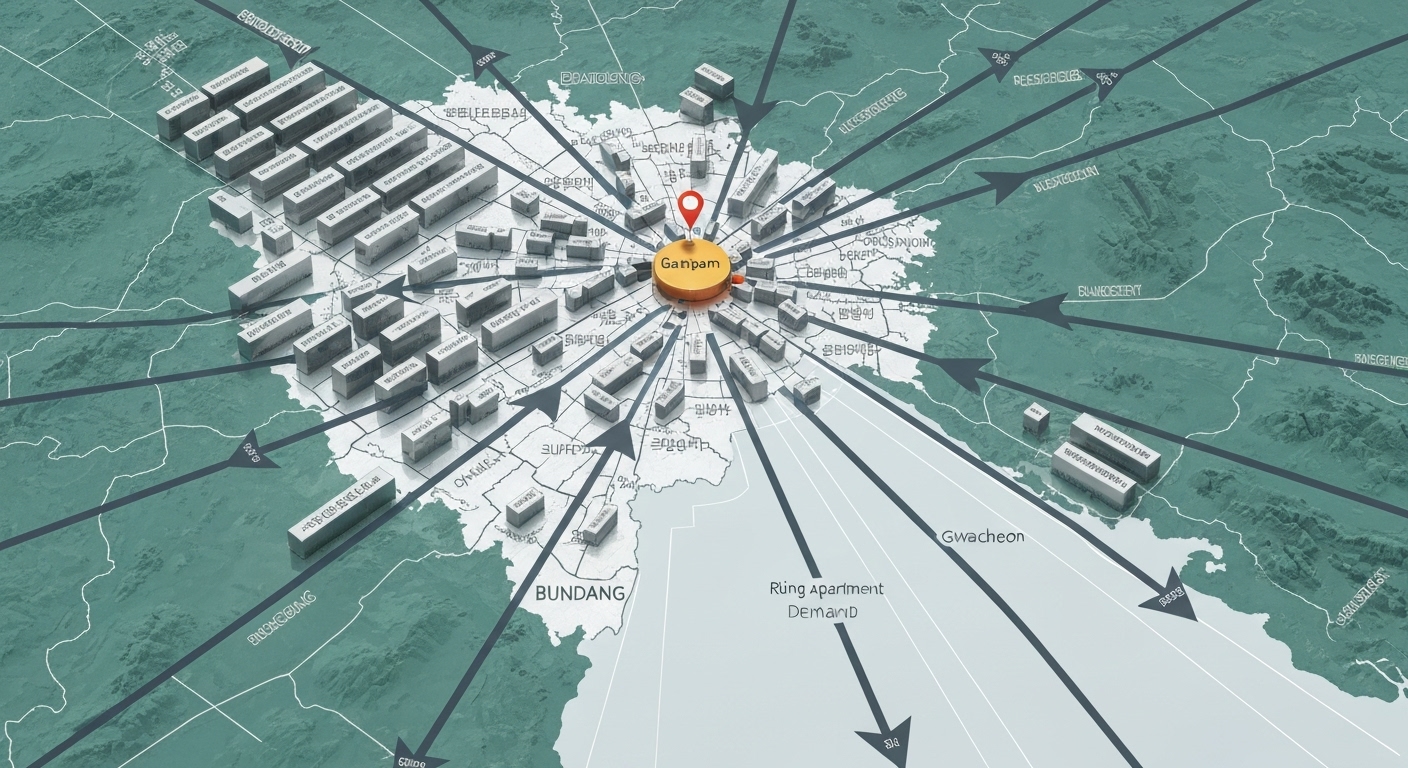
이러한 과열은 특히 서울의 핵심 지역인 '한강벨트'를 중심으로 두드러집니다. 송파, 강남, 서초구는 물론, 성동, 마포, 광진구 등에서도 신고가 행진이 이어지며 규제 이전의 과열 분위기를 재현하고 있죠. 문제는 이 상승세가 규제 지역을 피해 분당, 과천 등 주변 수도권 지역으로 확산되는 '풍선 효과'를 낳고 있다는 점이에요.

Seoul's Housing Prices Soar Past Regulations: Where Are the Opportunities for Homeownership?
The recent movement in the Seoul apartment market feels like an unquenchable flame. Despite the government continuously introducing strong regulations and supply measures, the rise in housing prices has only paused briefly before soaring steeply again. Analyses suggest that the current weekly increase rate could reach a staggering 15% annually, and the average price of a Seoul apartment has already jumped well over 1.5 billion KRW.
This overheating is particularly noticeable around the core areas of Seoul, known as the 'Han River Belt'. Areas like Songpa, Gangnam, and Seocho, as well as Seongdong, Mapo, and Gwangjin, are seeing new record highs, recreating the overheated atmosphere that existed before the regulations. The problem is that this surge is creating a 'balloon effect', spreading to surrounding metropolitan areas like Bundang and Gwacheon to avoid regulation.
1. 왜 정부 정책은 시장에 통하지 않을까요? '학습 효과'의 늪
정부가 강력한 규제 카드를 꺼내도 시장이 반응하지 않는 데는 복합적인 이유가 있어요. 가장 큰 원인은 수요자들이 정부 정책에 대한 '학습 효과'를 갖게 되었다는 점이랍니다.
'막차' 심리 확산
- 수요자들은 정부가 추가 규제 지역을 지정하기 전에 서둘러 집을 사두려는 '막차' 심리를 보이고 있어요.
- 규제 발표 자체가 해당 지역의 가격 상승이 빠르다는 것을 공시하는 '공시 효과'를 낳아 오히려 수요를 자극하는 역설적인 상황이 발생하고 있죠.
자금력 있는 수요층의 시장 주도
- 현재 서울의 부동산 시장은 소득으로 집을 사는 시장이 아니라, 자금력이 충분한 사람들이 움직이는 '자산 시장'의 성격이 강해요.
- 6억 원 이상 대출 금지 같은 규제는 대출이 필요한 실수요자의 거래량만 줄였을 뿐, 현금을 동원할 수 있는 사람들의 신고가 거래는 계속 나오면서 전체 가격의 기준점을 높이는 역할을 했답니다.
규제 효과의 단기성
- 과거 15억 원 초과 주택에 대한 대출 금지 같은 극단적인 규제조차도 단기적으로는 가격 안정 효과가 있었지만, 그 효과는 2분기 정도에 그쳤고 장기적으로는 미미했어요.
- 특히 9억~15억 원 주택처럼 규제 강도가 약했던 구간에서는 가격 안정 효과가 아예 나타나지 않았다는 분석은 규제 정책의 실효성에 대한 근본적인 의문을 던집니다.
공급 대책에 대한 실망감
- 정부의 9·7 공급 대책에서 제시된 135만 호 공급 계획은 숫자는 크지만, 당장 입주가 가능한 물량이 아니기에 수요자들의 공급 부족 불안감을 해소하지 못하고 있어요.

1. Why Aren't Government Policies Working? The Trap of 'Learned Behavior'
There are complex reasons why the market is not responding even when the government introduces strong regulatory measures. The biggest reason is that demanders have developed 'learned behavior' regarding government policies.
The Spread of 'Last-Chance' Psychology
● Demanders are exhibiting a 'last-chance' psychology, rushing to buy homes before the government designates additional regulated areas.
● The announcement of regulations itself is creating an 'announcement effect' by publicizing that prices in those areas are rising quickly, paradoxically stimulating demand.
Market Domination by High-Capital Buyers
● The Seoul real estate market is not a market where people buy homes with income, but rather a 'asset market' dominated by those with sufficient capital.
● Regulations like the ban on loans over 600 million KRW only reduced the transaction volume of actual demanders who needed loans.
● However, new record-high transactions by those who can mobilize cash continue to occur, raising the benchmark for overall prices.
Short-Term Nature of Regulatory Effects
● Even extreme regulations like the past ban on loans for homes over 1.5 billion KRW only had a price stabilization effect for about two quarters, with negligible long-term impact.
● Analysis showing that price stabilization effects did not appear at all in segments with weaker regulations, such as homes between 900 million and 1.5 billion KRW, raises fundamental questions about the effectiveness of regulatory policies.
Disappointment in Supply Measures
● The 1.35 million unit supply plan announced in the government's 9·7 supply measure is a large number, but since these units are not immediately available for move-in, they are failing to alleviate demanders' anxiety about supply shortages.
2. 한국 부동산 시장의 특수성: '나쁜 붐'의 그림자
한국의 집값 상승은 단순히 자산 가치 상승을 넘어 거시 경제에 부정적인 영향을 미치는 '나쁜 붐'에 가깝다는 진단이 나와요.
가계 부채 증가와 소비 위축
- 미국에서는 집값 상승이 소비 확대로 이어지는 긍정적인 효과가 있지만, 한국에서는 주택 구입을 위해 빚을 늘리면서 가계 부채가 증가하고 결국 소비를 위축시키는 역효과가 나타난답니다.
- 특히 소득이 적거나 DSR(총부채원리금상환비율)이 높은 차주들이 금리 인상기에 변동금리 상품을 선택하는 경향이 있어, 금리 변동에 취약한 가계 부채의 질적 위험도 커지고 있어요.
전세 시장의 불안정 심화
- 입주 물량 감소와 실거주 의무 강화 등의 규제가 맞물리면서 전세 매물이 급격히 줄어들고 있답니다.
- 전세 매물이 귀해지자 세입자들은 장기 거주를 선택하거나 월세로 전환하는 경우가 늘고 있으며, 전세 대출 규제까지 강화되면 서민들의 주거 부담은 더욱 가중될 수 있어요.

2. The Uniqueness of the Korean Market: The Shadow of a 'Bad Boom'
The rise in Korean housing prices is not merely an increase in asset value; it is diagnosed as a 'bad boom' that negatively impacts the macroeconomy.
Increased Household Debt and Consumption Contraction
● In the US, rising home prices have a positive effect, leading to increased consumption. However, in Korea, it has the opposite effect: increasing household debt to purchase homes, which ultimately contracts consumption.
● In particular, borrowers with low income or high DSR (Debt Service Ratio) tend to choose variable-rate products during periods of rising interest rates, increasing the qualitative risk of household debt vulnerability to rate changes.
Deepening Instability in the Jeonse Market
● The combination of reduced housing supply and strengthened regulations like the mandatory residency requirement has led to a sharp decrease in Jeonse (lump-sum deposit) listings.
● As Jeonse listings become scarce, tenants are increasingly choosing long-term residency (4 to 6 years) or converting to monthly rent.
● If Jeonse loan regulations are further tightened, the housing burden on ordinary citizens could increase even more.
3. 악순환을 끊을 근본적인 해법은 무엇일까요?
단기적인 수요 억제책이 악순환을 반복하는 지금, 시장의 구조적인 문제를 해결할 근본적인 해법이 필요하다는 목소리가 커지고 있습니다.
'똘똘한 한 채' 신화 해체
- 현재의 세제는 실거주 1주택자에게 유리하게 맞춰져 있어 '똘똘한 한 채' 선호 현상을 부추기고 있죠.
- 이걸 해결하려면 다주택자에 대한 양도소득세 중과 같은 페널티를 완화하고, 장기적으로는 보유세를 늘리는 방향으로 세제를 개편해야 한다는 주장이 힘을 얻고 있어요. 양도세를 낮춰야 매물이 시장에 나와 무주택자에게도 기회가 될 수 있기 때문이랍니다.
수요 분산과 지방 활성화
- 서울의 수요 과잉 문제를 해결하려면, 서울에 집중된 대기업 일자리를 지방으로 분산시켜야 해요. 양질의 일자리가 지방에 생겨야 사람들이 서울로 몰리는 구조적인 문제가 해소될 수 있죠.
구체적이고 예측 가능한 공급 신호
- 장기적인 공급 계획 외에도, 실수요자들이 "얼마나 싼 가격으로, 좋은 지역에, 몇 년 내에 입주가 가능한지"를 알 수 있도록 구체적인 정보를 제시해서 심리적 안정을 줘야 한답니다. 3기 신도시 등 공공 택지 물량이 곧 나올 예정이니, 자금력이 부족한 실수요자들은 이 기회를 기다릴 필요가 있어요.
3. What is the Fundamental Solution to Break the Vicious Cycle?
With short-term demand suppression measures repeatedly leading to a vicious cycle, there is a growing call for fundamental solutions to address the structural problems of the market.
Dismantling the 'One Good Home' Myth
● Current tax laws favor single homeowners who reside in their homes, fueling the preference for 'one good home'.
● To resolve this, there is a strong argument for reforming the tax system by easing penalties like the heavy capital gains tax on multiple homeowners and gradually increasing property taxes in the long term.
● Lowering the capital gains tax would encourage listings to enter the market, which could also create opportunities for non-homeowners.
Demand Dispersion and Regional Vitalization
● To solve the problem of demand overconcentration in Seoul, the government needs to disperse the large corporate jobs concentrated in the capital to other regions.
● Structural problems caused by people flocking to Seoul can only be resolved when quality jobs are created in the provinces.
Concrete and Predictable Supply Signals
● Beyond long-term supply plans, the government needs to provide concrete information so that actual demanders know "how cheaply, in which good areas, and within how many years they can move in" to stabilize market sentiment.
● Since public land supply, such as the 3rd New Town projects, is expected soon, those with limited capital should wait for these opportunities.
4. 앞으로의 전망: '한 방' 정책의 딜레마
정부는 잦은 단편 대책이 시장에 내성을 키운다는 점을 인지하고, 규제 지역 확대, 대출, 세제를 아우르는 '종합 대책'의 시점과 강도를 고심하고 있는 것 같아요. 시장은 이미 추석 연휴 이후 규제 지역 확대나 대출 규제 추가 강화(예: 6억 원 기준을 4억 원으로 하향)와 같은 내용이 나올 가능성을 예측하고 있답니다.
하지만 과거의 경험은 단기적인 규제가 또 다른 풍선 효과나 악순환을 낳을 수 있음을 경고하고 있어요. 부동산 시장의 안정화는 정부가 얼마나 신중하고 효과적인 정책을 '패키지'로 내놓을 수 있는지, 그리고 그 정책이 단기적인 표심을 넘어 장기적인 주거 안정이라는 목표를 향할 수 있는지에 달려 있답니다.

4. Future Outlook: The Dilemma of the 'One-Shot' Policy
The government recognizes that frequent, piecemeal measures build market resistance and appears to be contemplating the timing and intensity of a 'comprehensive package' encompassing regulation, loans, and taxation. The market is already anticipating the possibility of expanded regulated areas or further tightening of loan regulations (e.g., lowering the 600 million KRW standard to 400 million KRW) after the Chuseok holiday.
However, past experience warns that short-term regulations can lead to further balloon effects and a vicious cycle. The stabilization of the real estate market hinges on whether the government can introduce a cautious and effective policy 'package', and whether that policy can prioritize long-term housing stability over short-term political gains.
레알 마드리드의 충격 계획: 홀란드와 로드리, 맨시티 심장을 훔칠까? (KOR/ENG)
🚨 2025년 10월 이적 시장 폭풍 예고: 레알 마드리드의 '갈락티코 3기' 시동? 홀란드 & 엔드릭의 운명은? 안녕하세요, 축구 팬 여러분! 쌀쌀한 10월이지만, 이적 시장의 루머만큼은 그 어느 때보다
choonsik-office.tistory.com
'오늘을 사는 지혜_Modern Wisdom_' 카테고리의 다른 글
| 단죄: 정의를 향한 복수, 그 숨겨진 배신자는? (KOR/ENG) (0) | 2025.10.17 |
|---|---|
| 2025 정읍 구절초 꽃축제 완벽 가이드: 솔숲에서 만나는 순백의 가을 감성 (KOR/ENG) (0) | 2025.10.16 |
| 레알 마드리드의 충격 계획: 홀란드와 로드리, 맨시티 심장을 훔칠까? (KOR/ENG) (0) | 2025.10.15 |
| 제주에서 만난 작은 유럽! 표선 '이오스' 감성 브런치 카페 (KOR/ENG) (0) | 2025.10.15 |
| 삼성·하이닉스, '30% 징크스'를 깰 AI 비밀 병기 3가지 (KOR/ENG) (0) | 2025.10.14 |


